Banking technology has automated many bookkeeping tasks However, anyone who has to work in the field of financial records is aware that it’s not perfect. Feeds from banks stop working, and historical transactions aren’t always available and customers still send statements as PDFs. This means that someone needs to convert a PDF file intended for reading into something that accounting software actually uses.
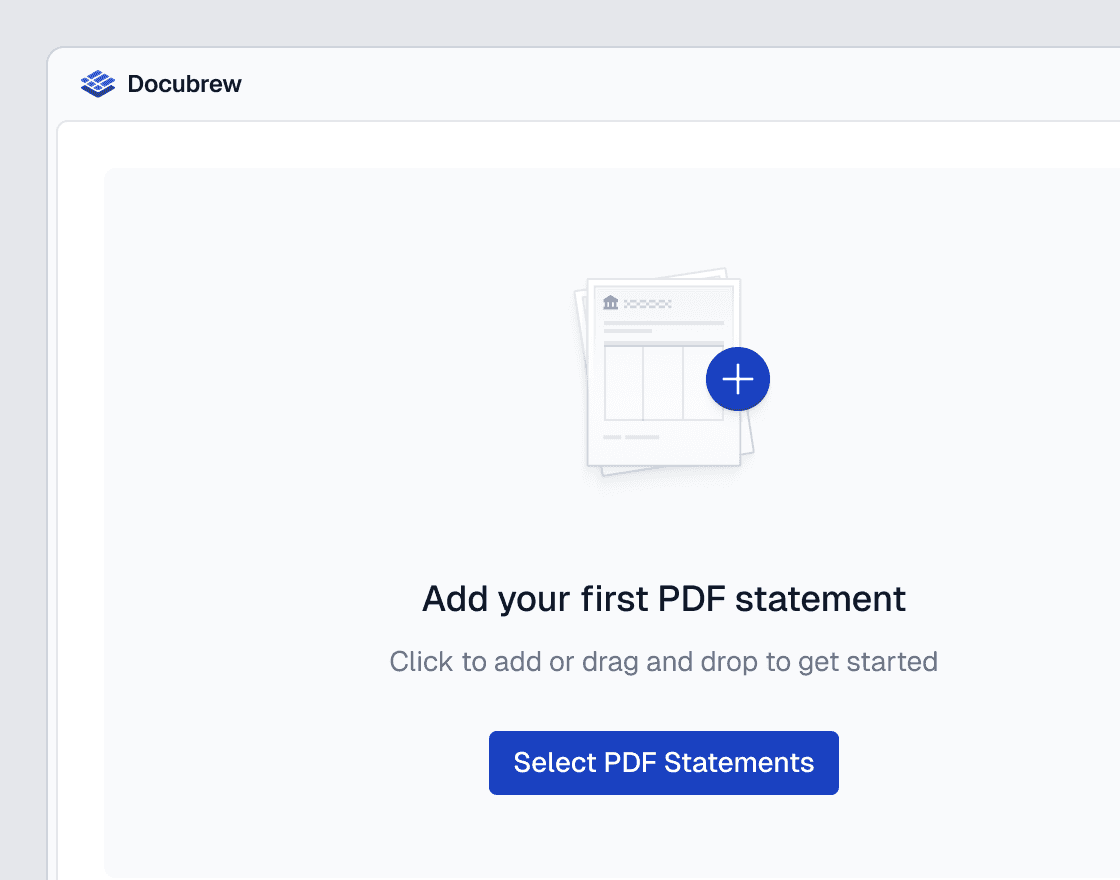
Image credit: docubrew.com
A bank statement converter can eliminate much of the repetitive work involved in that process. Instead of manually entering dates description, withdrawals, and deposits row-by-row, Docubrew converts information from the statement into a structured spreadsheet ready for use.
If a PDF ends up being the Missing Piece
Imagine that a bookkeeper making an annual reconciliation for clients. The accounting platform shows the most recent transactions, however some months from the past have been left out. The client had downloaded Original statements as PDF.
Traditionally, re-building the previous months can take the time of copying figures onto a spreadsheet. A bank statement PDF to Excel workflow offers a more efficient alternative. Docubrew removes transaction information from scanned paper bills or digital PDFs.
The reduced amount of manual transcription will also reduce the possibility of making mistakes when typing. This is a big advantage for those who need regularly transfer bank statements into Excel.
Keep the Pages That Matter
Statements of bank accounts aren’t made up entirely of transactions. A 12-page document may include the cover page, account overview, disclosures, or notices as well as a variety of pages of actual bank activity.
Docubrew lets users look at the document before they open it, and then select the appropriate pages before conversion. It is much easier to convert statements from bank accounts to Excel because the contents that are not related to the bank account of the document are not included in your work dataset.
The final file can be used by accounting platforms such as QuickBooks, Xero and FreshBooks.
CSV Provides Flexible Accounting Workflow
CSV remains useful because it is extensively supported by spreadsheets, databases, and accounting applications. Docubrew will convert your bank statement to CSV using the transaction tables included in the statement.
This same workflow is utilized to convert bank statements to CSV for a number of purposes, including reconstructing the past, starting the task of cleaning up unused client data, investigating missing transactions or preparing the information to be used in reconciliation.
The batch processing process is particularly useful for accounting firms who are working through multiple statements or clients at a time.
The financial documents you use should be protected by careful security measures
Processing financial records isn’t only about efficiency. Bookkeepers and accountants may be concerned about the location in which they handle financial records.
Docubrew uses two different methods. Its Windows desktop application handles documents locally on the user’s personal computer and therefore the data isn’t stored for conversion. For those who prefer a browser-based workflow can opt for the cloud version that is encrypted which allows uploaded files to be completely deleted after 24 hours.
This distinction distinguishes the platform from bank statement to Excel software that relies solely on remote processing.
Turning Document Archives Back Into Working Data
The PDF statement is a great document, however it’s a pain should you need to reconcile, sort filters, sort, or import transactions in other systems. Scanned files add a new complication since the information about transactions can only be present in the form of an image.
Docubrew provides a mix of statements parsing as well as OCR for scanned documents. It provides accountants, businesspeople, and bookkeepers a easy method to convert old financial records into actionable transactional information.
This simple method can improve an inefficient workflow by preserving the bank statement that was originally issued while converting its transaction table to the information you need to use.